The Pulse
The Pulse: The Market Was Broadly Up. Its Busiest Cards Often Were Not.
Across 995 usable one-month reads, 643 cards rose. But many of the cards drawing the most tracked transactions were falling, exposing the difference between category breadth and the price discovery happening in the cards people are watching now.
If the cards filling your social feeds looked weak this week, the broader market data may feel entirely wrong at first glance.
It is not. The disconnect itself is the story.
TrendApe's W30 market pass found 643 rising cards against 351 falling cards across 995 usable one-month reads. Four of five major TCG markets leaned positive. At the same time, many of the highest-transaction rows in Pokemon, One Piece, Magic, and Yu-Gi-Oh were down sharply.
Both views are true because they measure different layers of the market. Category breadth tells us how much of a tracked market is participating. Transaction activity tells us where current attention is concentrated. This week, those layers often moved in opposite directions.
W30 Market Board
The Market Board: Where Breadth and Attention Split
Each lane pairs the wider one-month sample with the cards drawing the most recent tracked activity, so neither view can stand in for the other.
Positive breadth, visible new-set pressure
Breadth
144 up / 56 down / 0 flat
Latest tracked transactions
7,284
Pokemon's wider sample leaned positive while its three busiest rows all carried steep one-month declines.
Broadly positive, not uniformly settled
Breadth
132 up / 66 down / 0 flat
Latest tracked transactions
6,018
The cards attracting the most activity were not representative of the wider positive sample.
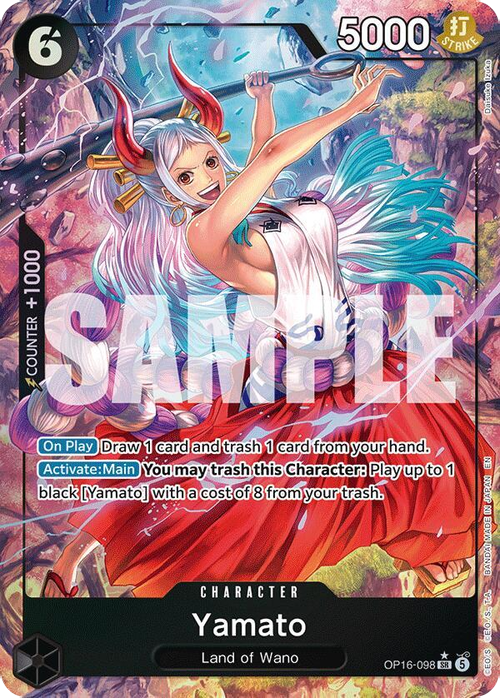
Yamato (098)
The busiest One Piece proof row in the visual set: 228 latest tracked transactions alongside a 64.27% one-month decline.
Activity moved in both directions
Breadth
127 up / 69 down / 1 flat
Latest tracked transactions
7,049
Magic shows why transaction activity is not a directional signal by itself.
The widest breadth still had exceptions
Breadth
164 up / 36 down / 0 flat
Latest tracked transactions
2,077
Lorcana supplied the strongest broad confirmation without turning every active card into a positive read.
The only negative-breadth lane
Breadth
76 up / 124 down / 0 flat
Latest tracked transactions
9,331
Yu-Gi-Oh was the measured exception where the wider sample and the busiest rows both showed pressure.
The comparison uses the full W30 enriched tiered sample for breadth and latest tracked transaction rows for attention. Counts describe the deterministic sample, not every card in existence.
Why Readers Should Care
This is the kind of split that triggers attention bias. When the most visible cards on our feeds are falling, it is easy to mistake a concentrated repricing story for weakness across the entire hobby.
A heavily transacted card falling does not prove its whole TCG is weak. A broadly positive TCG baseline does not prove that a heavily watched card has finished repricing. The useful approach is to keep the category and the individual card separate until both point the same way.
Reprints, new-product supply, and shifting playability may all shape individual cards, but we do not need to settle every cause to see the supported structural pattern: attention was concentrated in cards under price pressure while the wider tracked board remained positive.
How the Week Proved Itself
Pokemon shows how attention bias can make a positive market feel weak. One hundred forty-four of 200 tracked cards rose, while its three highest-transaction rows, Froakie, Meowth ex, and Frogadier, each fell more than 45 percent over one month. Collectors watching the busiest recent-set cards saw negative price discovery while the quieter tracked sample leaned positive; the data establishes the split, not its cause.
One Piece carried the same visibility gap without becoming a uniform positive call. Its three busiest rows, Mr.3, Prisoner of Impel Down, and Yamato, were all negative even though 132 cards rose and 66 fell. The cards attracting attention were not representative of the whole tracked category, but the losing side remained large enough to keep the broad read qualified.
Magic shows why transaction activity is not a directional signal by itself. Hex Magic gained while The Unbeatable Squirrel Girl and Tippy-Toe fell within the same group of highly active Marvel rows. The active cards were still finding different price paths inside a category whose wider breadth remained constructive.
Lorcana supplied the cleanest broad confirmation without confirming every card. One hundred sixty-four of 200 tracked cards rose, while active rows including Dale and Merida still fell. Even the strongest breadth result should remain card-specific rather than become a blanket breakout or buying claim.
Yu-Gi-Oh was the one market where high activity and broad direction both showed pressure in the measured window. One hundred twenty-four cards fell against 76 rising, and the market carried the largest latest tracked transaction total at 9,331. This confirms broad weakness in the current sample, not a durable diagnosis of category fatigue; the next check is whether that alignment persists.
Evidence & Method
Direction is based on each card's recorded one-month percentage change in the W30 tiered enrichment files. Counts describe the current deterministic sample, not every card in existence. Two of 997 cards lacked a usable one-month change value.
Latest tracked transactions use the final point in each proof card's recent-sales series, dated July 13, 2026. Proof rows are ordered by latest tracked transactions within each market rather than selected because their direction supports the headline.
The evidence does not establish reprint, supply, playability, or release-cycle causality, and one monthly window is not durable market truth. This is market commentary, not investment advice.
- Source
- TrendApe W30 enriched tiered market memory (TCGplayer)
- Window
- Latest deterministic enrichment point; proof rows dated 2026-07-13
- Volume
- 997 tracked cards across five markets; 995 with usable one-month change values
- Method
- Full W30 cross-TCG breadth sample paired with each market's highest latest tracked transaction rows
- Caveat
- Deterministic sample, not every card in existence; market commentary, not investment advice
What to Remember
"A strong market can still feel weak when attention is concentrated in the cards falling fastest. Category breadth and algorithmic visibility are not the same signal."
The next useful check is whether those busy cards stabilize without the wider positive breadth breaking.